Zachary Maldonado
HIST 370, Duke University

How did the Spanish Learn of Mexica Developments?
Cortes questioned indigenous chiefs and lords extensively on the subject of Tenochtitlan and the military capabilities of the Mexica. Bernal Díaz del Castillo elaborates on this in his Historia Verdadera, where he details Cortes’ interactions with Masse Escasi and with Xicotencatl, who, having been a great lord, was well-informed on Mexica affairs. The aquatic fortifications of Tenochtitlan—most importantly details surrounding the canals, their depth, the lake, the causeways and removable bridges, drawbridges in the inner city, the aqueducts and more—were all revealed to the Spaniards in this manner. Díaz adds that many lords and chiefs even brought along paintings of how the Mexica fought, altogether giving the Spanish a comprehensive understanding of not only what made the city formidable, but also of how the Mexica might fight back when the Spanish attack. Here we come across another major inequality in the warfare that was soon to come. In no way did the Mexica in Tenochtitlan have this same level of understanding regarding Spanish resources and military capabilities. All of this is to say that while it is true that Tenochtitlan was built-up with the impressive hydrological innovations enumerated above, these capabilities were not so unexpected to the Spanish after having received extensive accounts from indigenous lords knowledgeable on the subject. It should be emphasized again here that among Cortes’ first thoughts upon entering the city was the need for the construction of several brigantines “whenever it should become necessary”. Moctezuma, by contrast, made it one of his key directives to send emissaries bearing lavish gifts to the Spanish. Unknowingly, what Moctezuma actually accomplished was to further fuel Spanish desire for wealth and conquest. Both sides sent spies as well, but differ in responses to intel. Moctezuma ordered rituals and sacrifices to the gods, seeking divine guidance and protection, while Cortes ordered the construction of the brigantines to aid in the immediately planned conquest. It is not hard to see which of these responses was effective in establishing strategic military superiority.
"La Noche Triste": A Success or a Devastating Failure?
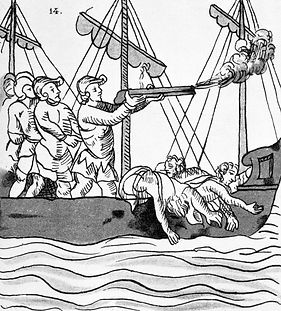
Bernal Díaz’ account of “La Noche Triste” provides an example of the advantages that canals and removable bridges afforded the Mexica. He recounts in Historia Verdadera, after the death of Moctezuma, the narrow Spanish escape from Tenochtitlan. Cortés’ fears upon entering the region become reality when the Mexica raise the bridges, effectively trapping the Spanish forces and Tlaxcalan allies within the city, at the mercy of the Mexica. He also notes a key Spanish counter-innovation: Cortés ordered the construction of a portable bridge of beams and planks that would take their forces to safety during the night. The Spanish were heavily outnumbered, and surely would have perished that night if not for the Tlaxcalan allies that accompanied them in this mission, as well as two integral factors that will be elaborated upon below. Díaz notes that once the operation was revealed, swarms of Mexica warriors and canoes overwhelmed the Spanish, many of whom had already crossed the makeshift bridge, which was consequently destroyed by the Mexica. This instance demonstrates the vital role that the canals played in Tenochtitlan’s defense. Canals, an otherwise seemingly harmless hydrological adaptation, became a formidable feature of the city once the bridges were raised, addying layers of difficulty to the planned Spanish escape that ultimately resulted in heavy losses. Many of these were widened and deepened in anticipation for the inevitable escape attempt. This unique hydrological feature was effective, so much so that Díaz adds the “passage or water opening was soon filled up with dead horses, Indian men and women, servants, baggage and boxes”, but it failed in preventing the Spanish escape altogther.
These circumstances certainly made a Spanish success look unlikely. The next segment of Díaz’ account provides some explanation for the historical course of events to follow. Cortes, along with the captains and soldiers who passed the bridge first on horseback, were able to escape the city by charging through the causeway towards the mainland. Book 12 of the Florentine Codex adds that the Spanish were in possession of muskets, crossbows, swords, halberds, helmets, shields, and other technologies that aided them in combat. In order to truly understand how the Spanish could (and did) overcome defensive aquatic adaptations like the modified canals and removable bridges, the above factors must be taken into account. The first one being horses, which allowed Spanish forces to charge through hordes of Mexica, at times nullifying the advantage gained by the sharp difference in manpower and restrictive escape paths. Díaz himself attests to this in Historia Verdadera when he admits that “we could do nothing beyond what we accomplished which was to charge with sword thrusts against those who tried to lay hands on us, and to march and advance to get off the causeway”. This was the sole solution to the confinement, as to each side of the causeway lied either water or rooftops, which allowed Mexica to hurl stones and darts at passersby. Despite even this formidable layout and narrow escape route, Mexica hydrological adaptations and technologies stood no chance against the combination of horses and—the second factor which has been mentioned above—superior Spanish technologies. While “La Noche Triste” was ultimately a Spanish loss in many ways, it was also proof of the vulnerability of Mexica defensive adaptations in the face of Spanish technology and resources.
Horses and technological advantages weren’t the only factors that aided the Spanish in overcoming Tenochtitlan’s aquatic adaptations. The Spanish were able to regroup, heal, and replenish forces and resources in settlements outside Tenochtitlan. Bernardino de Sahagún recounts in the Florentine Codex book 12 how these settlements & cities complained of harsh treatment and tribute policies imposed by the Mexica, and wasted no time supporting the Spanish, who they believed could help relieve them of these burdens. Mexica spies pursued the Spanish along the route back from their narrow escape, resulting in another battle that serves as a key example of Spanish combat advantage. Sahagún details that the Mexica took the opportunity to finish the Spaniards off once and for all, and succeeded in surrounding the Spanish but failed utterly in subduing them. Despite having to fight from all sides, the Spanish killed off a large portion of the Mexica forces, who were “hurling” themselves at the Spanish. Armored and on horseback, the Spanish were able to prevail with little losses. This example corroborates the idea that regardless of environment (within the aquatic Tenochtitlan or in mainland territories), differences in combat technology and methods amounted to a clear Spanish advantage. So much so that, as seen during “La Noche Triste”, any defensive advantage gained from Mexica hydrological adaptations is counteracted.
Recovery
To understand why the canal and bridge-riddled city layout of Tenochtitlan was to fail in the battle to come, it must first be understood that the Spanish had developed a network of allies, reinforcements, and a resource chain that the Mexica did not have—which is why they were able to bounce back from the losses at Tenochtitlan. Sahagún also takes note, in book 12, of the regrouping that occurred in Tlaxcala. There, Cortés’ forces were healed and joined by Francisco Hernandez, who arrived along with 300 additional soldiers, many horses, weapons and artillery to replace that which was left within Tenochtitlan. In stark contrast to the ensuing period of Spanish recovery, the Mexica were left to suffer the most consequential of their losses yet. Sahagún adds that smallpox wreaked havoc on the Mexica for sixty days, spreading all throughout the city and greatly weakening the strength of its warriors. The devastating “disease of postules” left many disabled or paralyzed for prolonged periods of time. Bernal Diaz, who had witnessed for himself years of killing and destruction as a foot soldier, remarked that upon Spanish entry into Tenochtitlan, the Mexica looked "so thin, sallow, dirty and stinking that it was pitiful to see them” (Brinkerhoff, 2016). As their numbers diminished, the Mexica were less and less able to modify and utilize their aquatic adaptations for defensive advantage. Even at a pre-disease strength, Spanish forces were able to overcome the canals, legions of canoes, removable bridges, and constricting causeway escape routes in the sense that Cortés succeeded in his escape mission (albeit having suffered heavy losses).

Differences in Concepts of War
The Mexica sought face-to-face combat, something that the Spanish often avoided, instead preferring to position themselves behind cannons from afar (although cannons were not so common in this campaign due to difficulties in transportation, this trend was still apparent). This difference was especially damaging to the Mexica during the siege of Tenochtitlan.
It was custom for the Mexica to capture their enemies, occasionally for ritual execution, as opposed to killing them on the spot. Brinkerhoff notes in Reexamining the Lore of the "Archetypal Conquistador" that they “refused to beat the Spanish on the back of the head during battle”, as to not deny them of an “honorable warrior’s death”. The Spanish, by contrast, did not operate under this constraint. The massacres and in-battle slaughtering was culturally unthinkable to the Mexica in many ways.
With the above factors in mind, any defensive edge gained from hydrological innovations would soon be overcome by the Spanish, in part due to these major differences in conceptions of war. As mentioned above, Hernan Cortés himself writes that as soon as he had entered the city of Tenochtitlan he wasted little time in the construction of several brigantines. He claims to have instantly recognized the city as a potential threat in that its inhabitants could remove the bridges along the causeways and leave attackers stranded, vulnerable to starvation and lacking a means of escape. Cortés, in his second letter, also is sure to note that these brigantines were large enough to take ashore 300 men and the accompanying horses. The goal was to conquer, and if that meant obliteration of a people and their culture, then so be it. This is not the kind of behavior that the Mexica could have anticipated, and ultimately they were underprepared despite extensive advantages gained from key innovations such as the canals, causeways and removable bridges.
An Unforeseen Spanish Motivation & War Strategy
Unfortunately for the Mexica, the Spanish were not only in it for the honor of battle. Th capital city was to be conquered by any means necessary. Brinkerhoff notes that the Spanish, in this particular case, actually benefitted from fighting on foreign territory in that they (and especially Cortés) had “nothing to lose but their lives”, as the conquistador had already defied governor’s orders in his campaign. He would either capture Tenochtitlan, or face shame and prison in Spain. This side of the conquest, not so frequently shed light upon, explains why Cortés and his soldiers were so willing to continue after the devastating losses during “La Noche Triste”. A determination that the Mexica could not have understood fueled Spanish counterinnovation that destroyed Tenochtitlan’s unique advantages.
Brinkerhoff mentions another vital piece of context, that being the Mexica refusal to surrender. Surrounded and well into the siege, it is an understatement to say that food and water were scarce within city bounds. Famine resulted from the Spanish tactic of cutting of access to chinampas, which were located on the outskirts of the city. Not to mention the major loss in influx of goods and supplies as tribute collection ceased. Despite these harsh conditions the Mexica persisted, which frustrated Cortés and his men, who viewed this as stubborn and barbaric. Compound this with pre-existing notions of the barbarism of Mexica human sacrifice, and one might begin to understand the rage that compelled the Spanish to destroy the chinampas, aqueducts, and many of the other unique beneficial technologies of Tenochtitlan.
It should be beneficial to return to the construction of the brigantines as a key Spanish development in the region. These boats served as one of the most effective counter-innovations that the Spanish employed in response to Mexica engineering. Book 12, chapter 30 of the Florentine Codex notes the assembly that occurred in Tetzcoco. The Spanish searched thoroughly for any sort of entrance into Tenochtitlan, attempting to overcome the difficult urban landscape resulting from “winding” canals that constantly “bent back and forth”. After having experienced much failure in doing so, two boats made it inside—yet another example of hardships presented by Mexica engineering, and subsequent Spanish workarounds. In the same chapter, it is detailed how the Spanish then responded to walls erected along the causeways. After just a fourth cannon shot, the walls crumbled away, allowing Cortés’ land-based assault to simultaneously commence. This sequence of events repeated for consequent causeway obstructions; there was not much for the Mexica to do in response other than to duck away from the artillery shots. Time after time, Mexica hydrological adaptations—while no doubt impressive—crumbled in the face of the Spanish operation, which brought fatal unforeseen challenges to a people culturally and technologically underprepared.
Ironically, the Spanish could not have constructed the brigantines if not for the manpower and knowledge of their indigenous allies. Fabian delves into a perspective buried by history in Masters of The Land: Native Ship and Canal Building During the Spanish-Aztec War that corroborates this assertion of a Spanish dependency on indigenous knowledge. A caravan of around 30,000 native people, under the orders of Cortes, were ultimately those responsible for the acquisition and transportation of vital construction materials that were to be used in the creation of the 13 brigantines. This construction effort called for a considerable reserve of natural resources—among them timber, stone, pitch, and cotton—that required extensive native knowledge of geography, as well as the native hydrological engineering methods that were developed over hundreds of years. Tenochtitlan wasn’t the only example of impressive aquatic adaptation, and in fact owes its existence to the knowledge obtained through the indigenous peoples that dwelled in the Basin of Mexico before the arrival of the Mexica. A labor force of some 40,000 native workers were responsible for digging of the canal that allowed the boats to access Lake Texcoco. This canal is estimated to have been 12 feet wide, equally deep, and extending over a mile to the shore. The Spanish—in their comparatively small numbers—were the overseers of the operation, while indigenous peoples—who built the ships themselves, conducted the 60 mile resource retrieval expedition, and dug the massive canal—were its execution. They were not merely a labor force, but instead were in many ways the brawn and the brains of the operation. It could easily be argued that without this construction effort, the assault on Tenochtitlan would have played out very differently. The Spanish were able to leverage indigenous hydrological knowledge to conduct their operation. The Mexica, by contrast, could not have done this, as their concept of war differed greatly from the Spanish, not to mention that during the Spanish construction of the brigantines the Mexica were instead battling devastating disease and famine.